Trial Lecture
Title: TBA
Time and place: November 27, 2026, 10:15 AM, Tøyen hovedgård
Public Defence
Adjudication Committee
- Associate Professor, Anna Laine-Petäjäkangas, School of Forest Sciences, Faculty of Science, Forestry and Technology, University of Eastern Finland, Joensuu
- Dr Gustaf Granath, Department of Ecology and Genetics, Plant Ecology and Evolution (EBC), Uppsala University
- Associate Professor Kjetil Lysne Voje, Natural History Museum, University of Oslo
Chair of the Defence
- Professor Arild Johnsen, Natural History Museum, University of Oslo
Supervisors
- Professor Rune Halvorsen, Natural History Museum, University of Oslo
- Professor Knut Rydgren, Western Norway University of Applied Sciences, Sogndal
- Professor Inger Auestad, Western Norway University of Applied Sciences, Sogndal
Summary
Peatlands have a long history of exploitation, with detrimental effects on the ecosystems’ biodiversity and functioning. With the increased recognition of the need to conserve and restore peatlands, restoration efforts are increasing worldwide. However, despite four decades of research, our ability to evaluate the recovery process and predict the long-term outcomes of restoration measures remains limited.
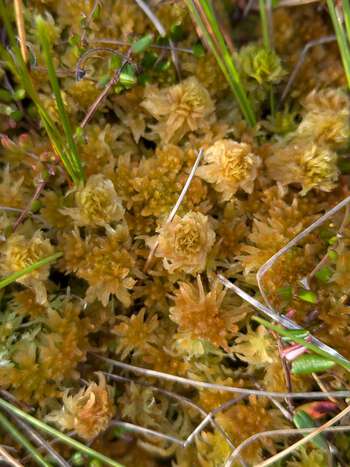
This thesis aims to increase our understanding of how restoration success in Sphagnum-dominated peatlands can be evaluated, focusing on metrics, methods and monitoring in relation to the three common restoration goals: restoring (i) hydrology, (ii) vegetation, and (iii) peat accumulation.
The findings show that successful restoration of degraded peatlands is possible, but achieving the three restoration goals requires different time frames, ranging from years to centuries. Moreover, they show that conclusions about restoration success depend on methodological decisions such as the choice of reference ecosystem and the criteria used to define restoration success.
By identifying key considerations related to field and analytical methods and providing recommendations on the use of metrics, methods, and monitoring, the thesis contributes to improving evaluations of restoration success and promotes efficient use of available resources (i.e. time, funding, and expert knowledge).
Contact