About the course
Marine fisheries and fish farms are expanding rapidly worldwide. Although they bring important economic and social benefits, they also create significant ecological challenges.
Environmental DNA (eDNA) sequencing offers a powerful way to assess these systems. Using eDNA, you can examine the diversity of protistan parasites (such as the amoebae that affect salmon gills), toxic microalgae (including those that caused the loss of 13 000 tonnes of Norwegian farmed salmon in 2019), and fish diet, revealing how fish interact with the organisms they eat.
In this MSc course, students work in Brazilian–Norwegian pairs to gain hands-on experience in both eDNA methods and international collaboration. These pairs will collect samples in local fisheries and aquaculture settings, amplify and sequence eDNA in the lab, and analyse the resulting data as part of a complete metabarcoding pipeline. Each pair will then present their work to scientists and to children from local schools, practising how to communicate science to different audiences. Lectures and readings are closely integrated with each stage of the work. This course is cross listed at UiO as BIOS4221 – Biodiversity Field Research.
Learning outcomes
After completing the course, students will
- Increase their knowledge about the ecology and biodiversity of marine aquaculture, and the threats caused by environmental change and human impact.
- Explore the range of DNA-based methods to assess the diversity of fish parasites, toxic microalgae, and fish diet in and around fisheries and fish farms.
- Learn relevant processes of applying DNA sequencing technologies (e.g., MinION) and performing basic bioinformatic analyses.
- Develop practical skills in international and intercultural collaboration
- Learn how to make and present scientific talks to different audiences.
- Learn about the work and hiring practices of Brazilian environmental and fish-health research institutes and companies.
Schedule
A detailed schedule will be provided to admitted students before the course starts.
The course is structured in four key stages:
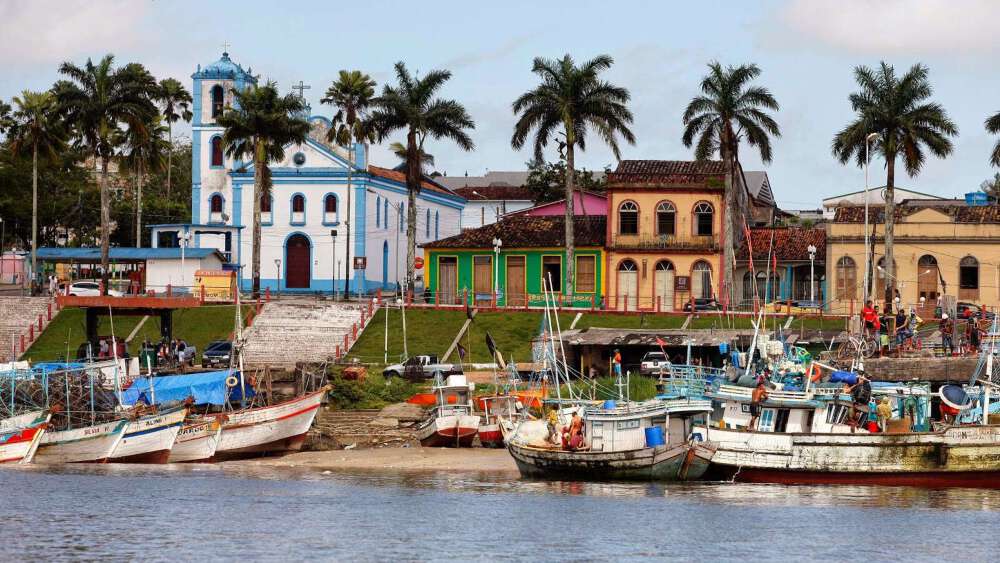
- Fieldwork: Sampling at fish markets, mangroves, and coastal sites.
- Lab work: DNA extraction, PCR, library preparation, and MinION sequencing, supported by PhD students.
- Data analysis: Basic bioinformatic and ecological analyses of metabarcoding data.
- Communication: Preparation and delivery of two presentations, one to students and staff and one adapted for local school children.
Beyond formal teaching and practical sessions, time is made available for shared social and cultural activities in Bragança to foster collaboration and cultural exchange between students.
Target group
MSc students in biology, marine biology, ecology, bioinformatics, or related fields
Language
English
Credits
10 ECTS
Assessment
Assessment will be constructively aligned with the learning outcomes by using written and verbal productive feedback at all stages of the course. Students will be required to present their research in one talk to students and staff, and another talk to local schools.
Teachers
- Micah Dunthorn, University of Oslo
- Adriana Lopes dos Santos, University of Oslo
- Jonathan Ready, Universidade Federal do Pará
- Professor Cristiana Maciel, Universidade Federal do Pará
- Quentin Mauvisseau, University of Oslo
- Audun Schrøder-Nilsen, University of Oslo
- Isabelle Ewers, University of Oslo
- Cintia Oliveira Carvalho, Universidade Federal do Pará
- PhD students enrolled in the parallel course “Assessment and Research Supervision in the Use of Environmental DNA” will be involved in direct research supervision and assessment
Admission and application
Number of students
- 8 Brazilian MSc students
- 8 Norwegian MSc students
Eligibility and prerequisites
A basic understanding of metabarcoding is strongly recommended.
How to apply
Applications for this course have not opened yet.
Brazilian students need to register through UFPA.
Selection process
Students will be selected based on academic background and a brief motivation statement.
Financial support
Brazilian students (registered through UFPA) and UiO students will have their travel and accommodation costs covered. Limited financial support is available for other Norwegian students.
Contact
Micah Dunthorn for practicalities.
BIOCORE Membership
We encourage all course applicants to become Associate Members of BIOCORE to receive updates and information about future events.
Not a member yet? Become a BIOCORE member here.