About the project
Heteroplasmy refers to the mitochondrial heterozygosity within an organism, in other words, the coexistence of more than one mitochondrial type. Stable heteroplasmy can be inherited from a heteroplasmic mother or arise after hybridization between two diverged lineages. Hydroides elegans is a polychaete from the family Serpulidae, well known for forming calcareous tube aggregations on ship hulls and underwater substrates in many harbors around the world. This successful invasive species has been discovered with exceptional frequency across populations, likely obtained through paternal leakage of mitochondria into hybrid offspring.
Neither hybridization nor heteroplasmy are rare events in nature, but the presence of stable heteroplasmy at a large scale in a highly heterozygous species provides a valuable opportunity to address fundamental questions about mitochondrial evolutionary pathways and the consequences of biparental inheritance of organellar DNA.
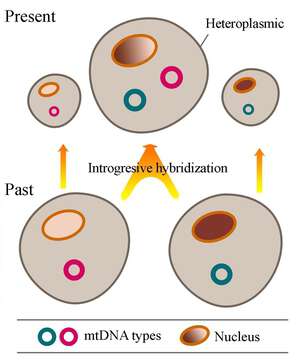
What if the genetic diversity generated by heteroplasmy confers an adaptive advantage rather than representing a mere accidental? The key question is then: what underlying mechanisms drive a species to shift its mitochondrial system toward persistent heteroplasmy? This project is designed to open a path toward addressing such evolutionary questions by generating high-resolution genome maps from numerous specimens sampled across a broad geographic range.
To fully understand the significance of heteroplasmy and its potential role in facilitating adaptation to new ecological niches, we designed a range‑wide survey encompassing both cryptic lineages and populations that are homoplasmic or heteroplasmic. This project targets the entire mitochondrial genomes to detect the degree of heteroplasmy, possible nuclear mitochondrial DNA segments (NUMTs), possible recombinations between the two mt genomes, signatures of selection.
Objectives of the project
The project's objectives are threefold: (1) Investigating the origin, maintenance, and evolution of heteroplasmy in H. elegans; (2) Conducting an integrative taxonomic revision to understand population dynamics and hybridization events; (3) Modeling the species' distribution and climate adaptation potential.
This project is funded by the Marie Skłodowska-Curie Postdoctoral Fellowship (MSCA-PF). Further information is available at: https://cordis.europa.eu/project/id/101152099