The project seeks to increase the flexibility of fertilizer production by enabling the use of a wider range of phosphate rocks, particularly low-quality phosphates that could not previously be processed.
The three-year project, running from 2025 to 2028, is coordinated by Yara International ASA and funded by the Research Council of Norway with NOK 16 million. The project is a collaboration between Yara, the Institute for Energy Technology (IFE), and the Natural History Museum of the University of Oslo(NHMUiO).
Yara International ASA is one of the world’s largest producers of nitrogen-phosphorus-potassium fertilizers. This project is driven by two key economic and geopolitical objectives: (1) to diversify sources of phosphate raw materials by increasing the flexibility of the nitrophosphate process used in fertilizer production, and (2) to enable faster responses to geopolitical changes affecting phosphate raw-material supply chains and markets.Together, these objectives aim to ensure a reliable fertilizer supply for efficient food production. The project therefore contributes to the United Nations Sustainable Development Goals, Norway’s Mineral Strategy (2023), and the European Critical Raw Materials Act (2024).
The quality of phosphate rock used as a raw material in fertilizer production can vary significantly. To ensure a robust production process, it is therefore essential that the process can accommodate different types of phosphate rock. The fertilizer production process must be sufficiently adaptable to handle a wider range of phosphate rocks, including low-quality phosphates. Achieving this requires a deeper scientific understanding of phosphate-rock mineralogy.
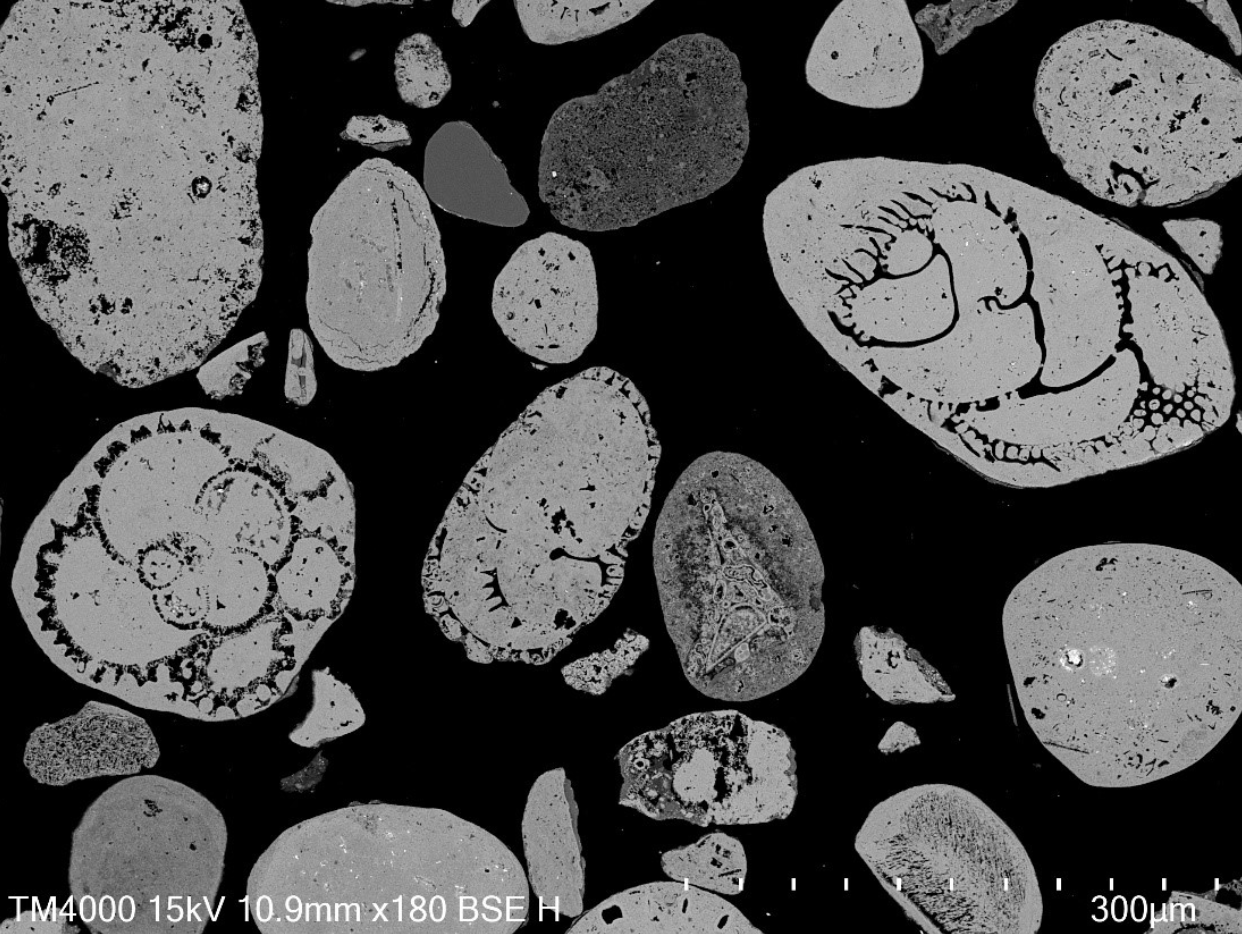
A prerequisite for increasing process flexibility is the development of a comprehensive analytical workflow for the mineralogical and chemical characterisation of a range of phosphate rocks. This task of the project is carried out by the NORMIN group at the NHM UiO.The results of this workflow inform fertilizer-production processes and support the development of mitigation strategies to minimise or eliminate processing disruptions, improve process robustness and strategic independence, and reduce the environmental footprint.
Several mitigation approaches are tested and evaluated at both laboratory and pilot scale. The feasibility of scaling up the most successful methods to full plant scale is also assessed.In addition, the mineralogicalcharacterisation will contribute to a better scientific understanding of the formation of phosphate deposits, which are critical raw materials for fertilizer production.