Hippothoa is a bryozoan genus where species form uniserial colonies as opposed to large sheets. The zooids are connected via an elongated structure called a cauda. The colonies do not only grow straight forward, they do also branch out.
We have two species of Hippothoa that are quite similar to each other: Hippothoa flagellum and Hippothoa divaricata. Fortunately, there are some features that distinguish them and make it possible to identify the species.
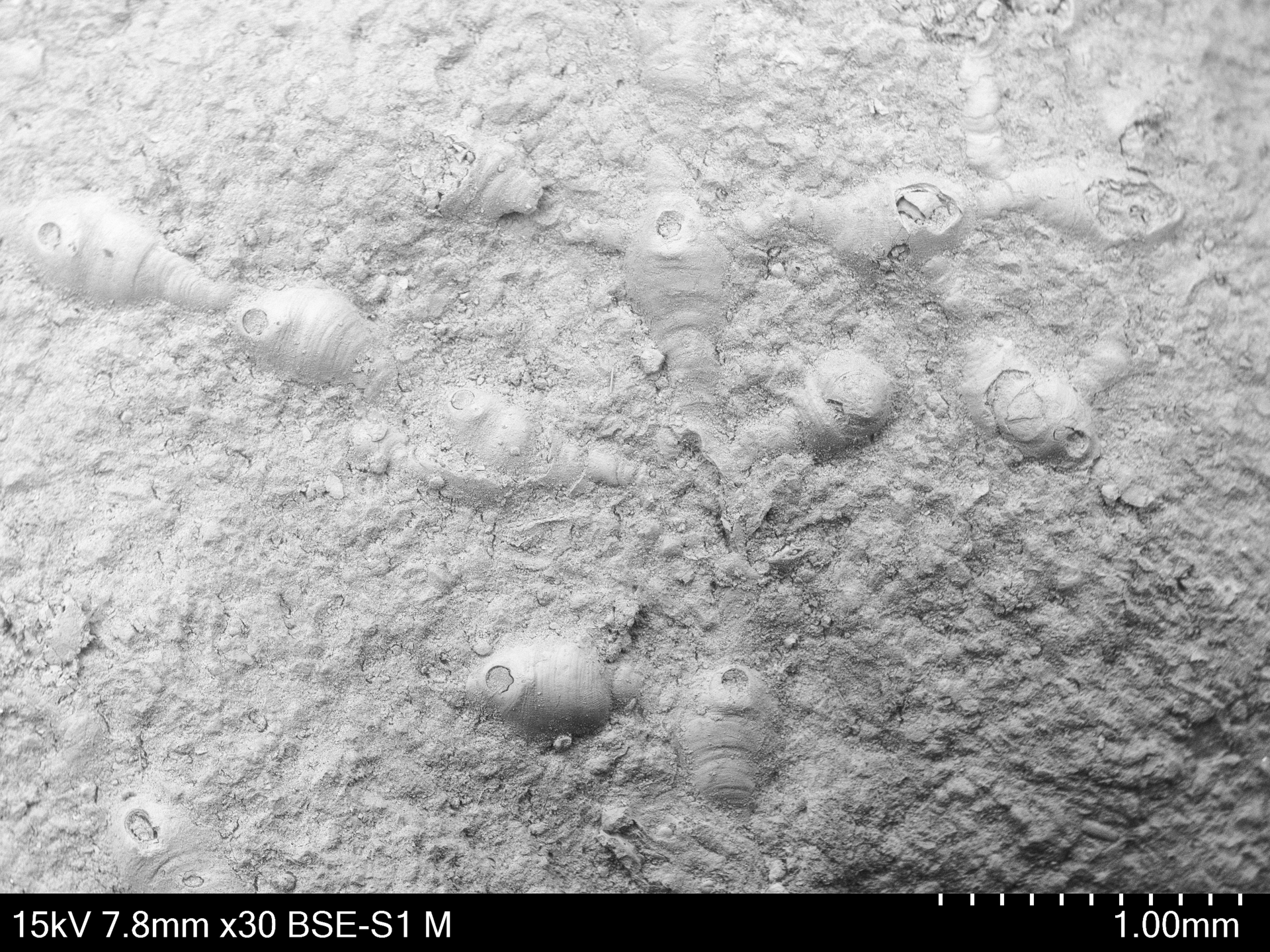

The way the colonies branch out is actually species-specific, so that is the first character to look at. In Hippothoa flagellum, the branching occurs in a + shape, where you get a maximum of one branch per side of the zooid (Image no. 1). In Hippothoa divaricata, the branching can end up in an x shape, where you can get two branches per side (image no. 2).
How the female zooids with the ovicells look is also a feature that differs between the two species. In Hippothoa flagellum, the female zooid is short and compact, with almost no "tail", while in Hippothoa divaricata it is quite similar to the other zooids. Can you spot the female zooids in the images?
You'll find a third difference in the orifice, more specifically the sinus. This is not very clear in these images, but in Hippothoa flagellum the sinus is wider, while it is smaller and narrower in Hippothoa divaricata.
In the second picture you can see that the zooids of Hippothoa divaricata have a keel. You will not find this in Hippothoa flagellum.