Permanent exhibition
Outside the entrance to the museum
Did you know that we can read the Earth's history in rocks? In the Stone Garden, Norway's geological history spanning over three billion years is told through large, colorful stones and impressive structures. Discover how to interpret rocks to understand their origins and the connections between geology and important minerals, such as metals.
The Stone Garden is free and open to everyone. The exhibition is designed for children to explore the world of rocks through their senses and movement.


The three parts of the Stone Garden:
The Stone Amphitheater
The amphitheater is constructed from Ringerike sandstone and features embedded stone blocks that show traces from the last Ice Age. It serves as a gathering place for school classes and others, providing a venue for events, whether focused on culture or nature. The amphitheater also marks the beginning of the geological history of Norway.
The Stone Path
Twenty-nine large, impressive stones tell us the 3-billion-year-long story of how Norway was formed. There have been mountain ranges that have risen from the sea, volcanic eruptions, and ore formations. We observe the evidence of the earliest signs of life and the largest bloom of multicellular life in Earth's history, as well as how new crust is formed, and we see remnants of enormous mountain ranges.
Rest areas and sculptures
Tables and benches made from flat stones are surrounded by extra-large, colorful, and sculptural rocks. One stone comes from the restoration workshop of Nidaros Cathedral and features small sculptures of animals created by sculptors for the cathedral. Midway along this pathway, you can find the largest stone - a sculpture made of larvikite shaped by sculptor Martin Kuhn.
Meet Petter the Toad
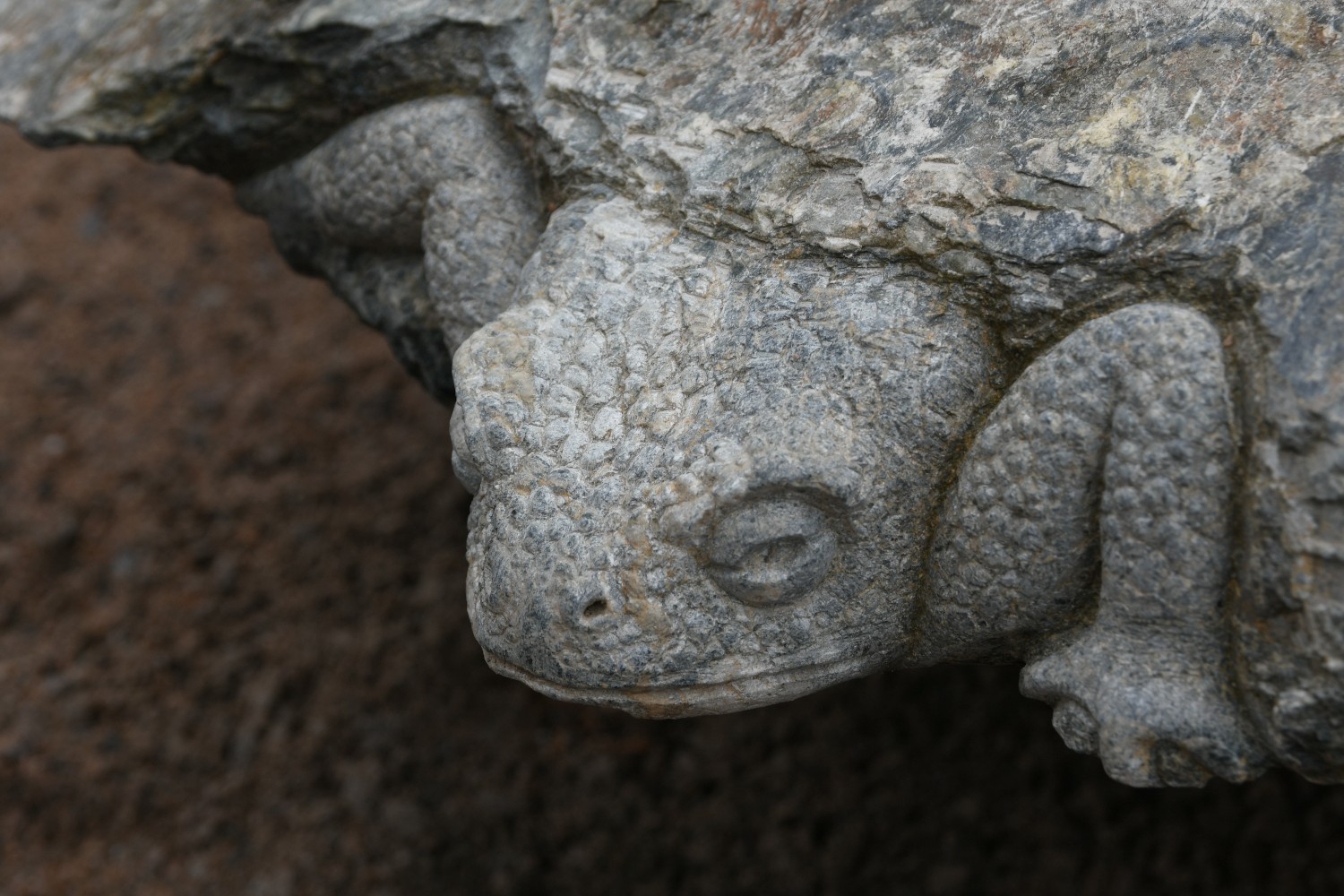
One of the stones in Steinhagen is a soapstone that has been carved with a variety of figures, including Petter the Toad. The stone was shaped by stonemasons at the Nidaros Cathedral Restoration Works.
The Stone Garden
- Landscape Architect: Landskaperiet
- Funded by Sparebankstiftelsen DNB
- All the stones have been donated to the museum by private landowners, mining companies, and institutions.