About the course
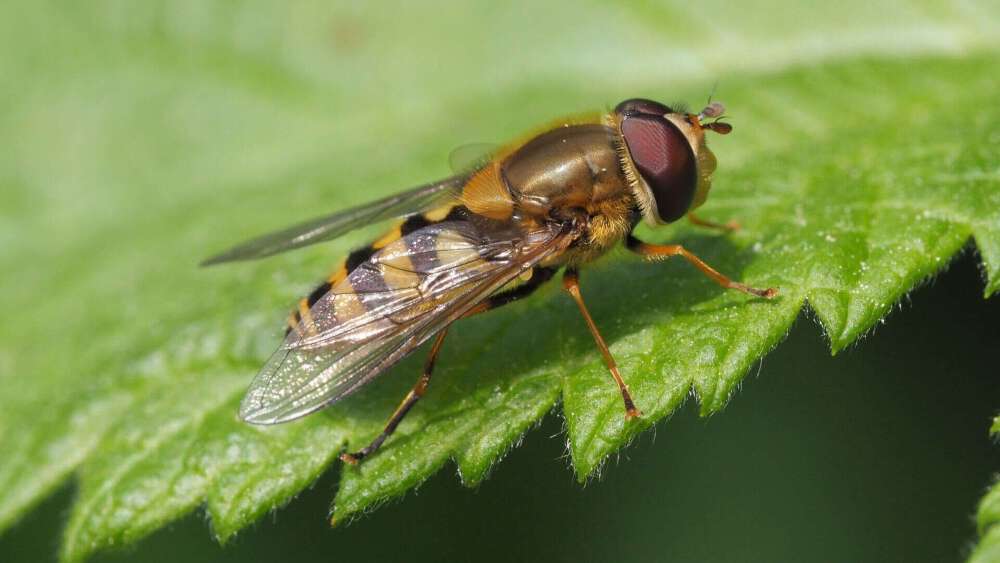
The order Diptera is one of the most abundant and diverse groups of insects. Dipterans are distributed all over the planet and have shown a remarkable ability to adapt to all kinds of environments, even marine habitats.
This course dives into the world of Diptera and gives participants the theoretical background and practical experience needed for collection, preservation, identification and analysis of flies and midges. The course combines fieldwork, lab work and lectures on topics related to Diptera systematics, biology and diversity.
The following themes will be covered:
- Effective sampling of Diptera (traps, baits and techniques)
- Preservation techniques and labelling
- Databasing and online resources
- Taxonomy and systematics of dipteran families
- Phylogeny and biogeography
- DNA barcoding and molecular identification
- Medical, veterinary and forensic dipterology
- Ecology and ecosystem services
Target group
PhD students, master’s students, postdocs, researchers, consultants and government officials with a relevant background in biology who want to deepen their knowledge of Diptera and their ecology.
Language
English
Credits
The course is equivalent to 3 ECTS.
Assessment
Preparatory reading prior to the course is required, and a written and practical exam will follow the lessons on Friday, June 27.
BIOCORE will provide certificates to participants who successfully pass the exam.
Teachers
Torbjørn Ekrem is professor of biosystematics and curator of entomology at the NTNU University Museum in Trondheim. His taxonomic expertise lies within the family Chironomidae, and he has considerable experience with molecular systematics and DNA barcoding of multiple organism groups.
Emily Hartop is associate professor of integrative taxonomy and phylogenetics at the NTNU University Museum in Trondheim. She is a specialist on scuttle flies (family Phoridae) and works more generally with methodologies to tackle dark taxa – the world’s largest, poorly known groups.
Dave Karlsson is the manager of Station Linné, a taxonomist and naturalist whose research focuses on insect diversity, with a particular emphasis on Hymenoptera (especially Braconidae) and (macro )Lepidoptera. He is actively involved in education and outreach and has a strong passion for natural history education.
Mårten Klinth is lab manager at Station Linné, where he develops DNA methods for insect identification and monitoring projects. He also works with the systematics of annelid worms and parasitic wasps and is engaged in training the next generation of systematists.
Erica McAlister is Principal Curator of Diptera and Siphonaptera at the Natural History Museum, London, UK, and Curator of Larger Brachycera, Mycetophilidae and Culicidae. In addition to working on these groups, she works on collection methods and development, and undertakes fieldwork and training both within the UK and abroad. Erica has published popular science books on insects (two specialising in flies) and is a strong advocate of science outreach. She is Deputy Chair of the Dipterists Forum in the UK.
Thomas Pape is professor and curator of Diptera at the Natural History Museum of Denmark. He works primarily on the taxonomy, systematics, phylogeny and evolution of calyptrate flies, and is also active in zoological nomenclature and as a co-editor of Systema Dipterorum. He has extensive field experience from most parts of the world.
Admission and application
Number of participants
14 participants.
Eligibility and prerequisites
Basic knowledge of insects and the characteristics of major groups (orders) is required to fully benefit from the course.
How to apply
Applications are now closed
We encourage all course applicants to become Associate Members of BIOCORE to receive updates and information about future events.
Not a member yet? Become a BIOCORE member here.
Selection process
If there are more applicants, they will be selected based on scientific, educational and/or professional merit, motivation and the usefulness of the course for the applicant, with priority given to BIOCORE Full Members and Associate Members. Results of the selection process will be announced by e mail shortly after the application deadline.
Contact
Elisabeth Stur, NTNU University Museum