About the project
Arctic plants manage to survive under some of the most extreme environmental conditions on Earth. They face low temperatures, large seasonal changes in light and short growing seasons, but somehow, distantly related plant lineages have independently colonized and adapted to these harsh environments. This raises a fundamental evolutionary question: have Arctic plants repeatedly evolved similar solutions to the same environmental challenges?
This project approaches this question across three complementary biological scales:
- Molecular pathway level: The circadian-regulated CBF cold-response pathway will be compared across six Arctic species and their closest temperate relatives to identify convergent patterns in cold and light responsive genes.
- Phenotypic and epigenetic level: Common-garden experiments with Draba nivalis and Cochlearia groenlandica will test how temperature and light shape phenotypic variation, DNA methylation and plasticity.
Population genetics level: Comparative population genomics across several Arctic species with contrasting mating systems will test whether adaptation repeatedly involves the same genes, genomic regions or biological pathways.
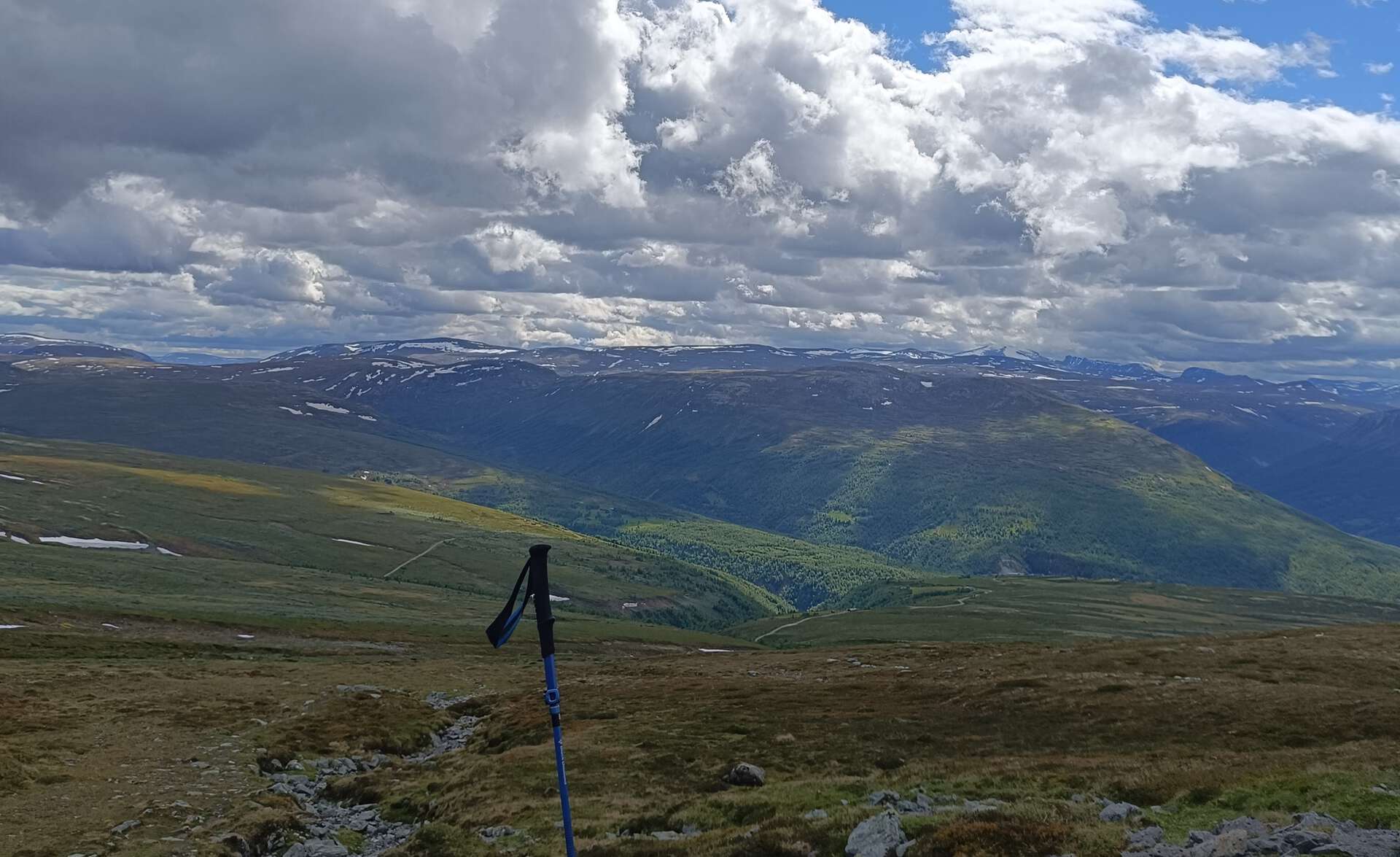
Arctic-alpine landscape at Sissihøa, Dovre. Photo: César Herrero González
Goal
The main objective of this project is to investigate the genomic, phenotypic and epigenomic basis of plant adaptation to Arctic environmental conditions and whether there are repeatable genomic and phenotypic patterns across independent Arctic lineages.
More specifically, the project will investigate plant adaptation along Arctic environmental gradients in which temperature and seasonal light regimes vary across latitude, while also considering finer-scale variation associated with local microclimatic differences, such as elevational differences.



.png)