About the project
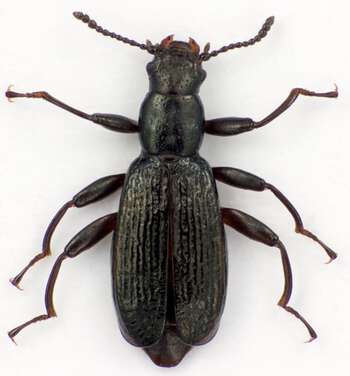
Aegialites (Mannerheim, 1853) is a genus of flightless beetles which belongs to the family Salpingidae. The beetles are, despite their flightless morphology, distributed all across the Northern Pacific coast, stretching from Northern Japan through the Kuril Islands and the Aleutian Islands, via Alaska and Canada, south to California.
Species within this genus are highly specialized for life in the supralittoral zone and exhibit morphological, behavioral and physiological adaptations to this physically demanding habitat. Adults typically measure 3–6 mm in length and are characterized by widely separated coxae, elongated tarsi, large claws and the absence of functional wings. These are traits that facilitate strong attachment to rocky substrates exposed to intense wave action.
Despite their distinctive ecology, many basic questions about Aegialites remain unresolved. This includes uncertainty about species boundaries, evolutionary relationships within the genus and patterns of dispersal and population connectivity. A morphological revision by Zerche (2004) increased the number of recognized species from four to thirty, illustrating how variable current estimates of species diversity are. At the same time, the occurrence of these flightless beetles on remote island systems in the Kuril and Aleutian archipelagos raises questions about how dispersal has occurred.
Genomic data for Aegialites are currently very limited. This project will generate new genetic resources and use them to investigate evolutionary relationships and population processes in the genus. By combining single-locus markers, whole genomes and genome-wide SNP data, the project aims to address questions across multiple evolutionary scales.
The objectives of this PhD project is therefore as following:
1. Resolve the phylogenetic relationships within Aegialites and assess species diversity in the genus.
2. Describe and investigate the genetic architecture of the mitochondrial and nuclear genome.
3. Investigate population structure, introgression, gene flow and dispersal patterns of selected populations of Aegialites.
