Abstract: Key innovations are traits that allow a group of organisms to diversify through occupying new ecological niches. Symbiosis is an often-overlooked trait that can serve as a key innovation and we use the turtle ants to explore this idea. The turtle ants (genus Cephalotes) are a diverse group of animals distributed from the southern United States throughout Central and South America, allowing us to test hypotheses about their phylogeny and biogeographic origin and history. Soldiers of the genus have extreme morphologies to allow them to occupy and defend their entirely arboreal habitats, and we use comparative genomics and developmental transcriptomics to explore how these soldiers evolved. In addition, turtle ants have very low stable isotopic signatures and rely on gut bacteria to enrich their diets, which we demonstrate occurs through nitrogen recycling. Experimental manipulations and analytical chemistry show that they can use the nitrogen provided by their symbiotic bacteria to invest in their cuticle to strengthen their external armor. These multiple traits have allowed the turtle ants to thrive in the nutrient limited canopy of the American tropics.
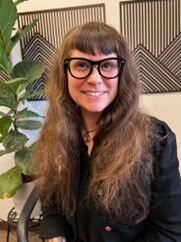
About the Speaker: Dr. Corrie Moreau is the Moser Endowed Professor of Entomology and Ecology and Evolutionary Biology at Cornell University and Director and Head Curator of the Cornell University Insect Collection. Dr. Moreau earned her Ph.D. in Evolutionary Biology from Harvard University and for her postdoctoral work was a Miller Fellow at the University of California, Berkeley. Before this she completed her undergraduate and master's degrees at San Francisco State University.
Dr. Moreau’s work focuses on the evolution of species interactions and features a broad range of taxa including insects, plants, fungi, and microbes, especially those that symbiotically associate with ants. She couples tropical fieldwork with genomic tools to address the origin of species and how symbiotic systems evolve. She has been a leader in the field of insect phylogenetics, comparative genomic analysis of ant-plant interactions, biogeography and trait evolution, and insect-associated microbiomes to better understand broad-scale evolutionary patterns of life. She has published over 125 scientific papers, including 5 book chapters. In addition to her passion for scientific research, Dr. Moreau is also actively engaged with efforts to promote science communication and increase diversity and inclusion in the sciences.
Dr. Moreau has received numerous awards including being elected a Fellow of the Royal Entomological Society in 2021, a Fellow of the Entomological Society of America in 2020, a Fellow of the American Association for the Advancement of Science in 2018, a Kavli Fellow of the National Academy of Sciences in 2016, a National Geographic Explorer in 2014, and highlighted as a Woman of Impact by the National Geographic Society in 2018. In addition, she has one genus and three species named after her!