About the course
DNA barcoding has found multiple uses in biodiversity science and management, as well as in authentication and bioinformatics. This five-day intensive course on molecular identification will give a basic introduction to the theory and best practice of DNA barcoding in biodiversity science and management.
Various topics will be presented by recognised experts in the field, and students will actively contribute to their own learning through hands-on exercises and seminars.
The following topics will be covered:
- Theory. What is DNA barcoding? Which genetic markers are used and why? How does DNA barcoding perform for various taxonomic groups? What are the possibilities and challenges associated with the method? What are the goals of international and national initiatives?
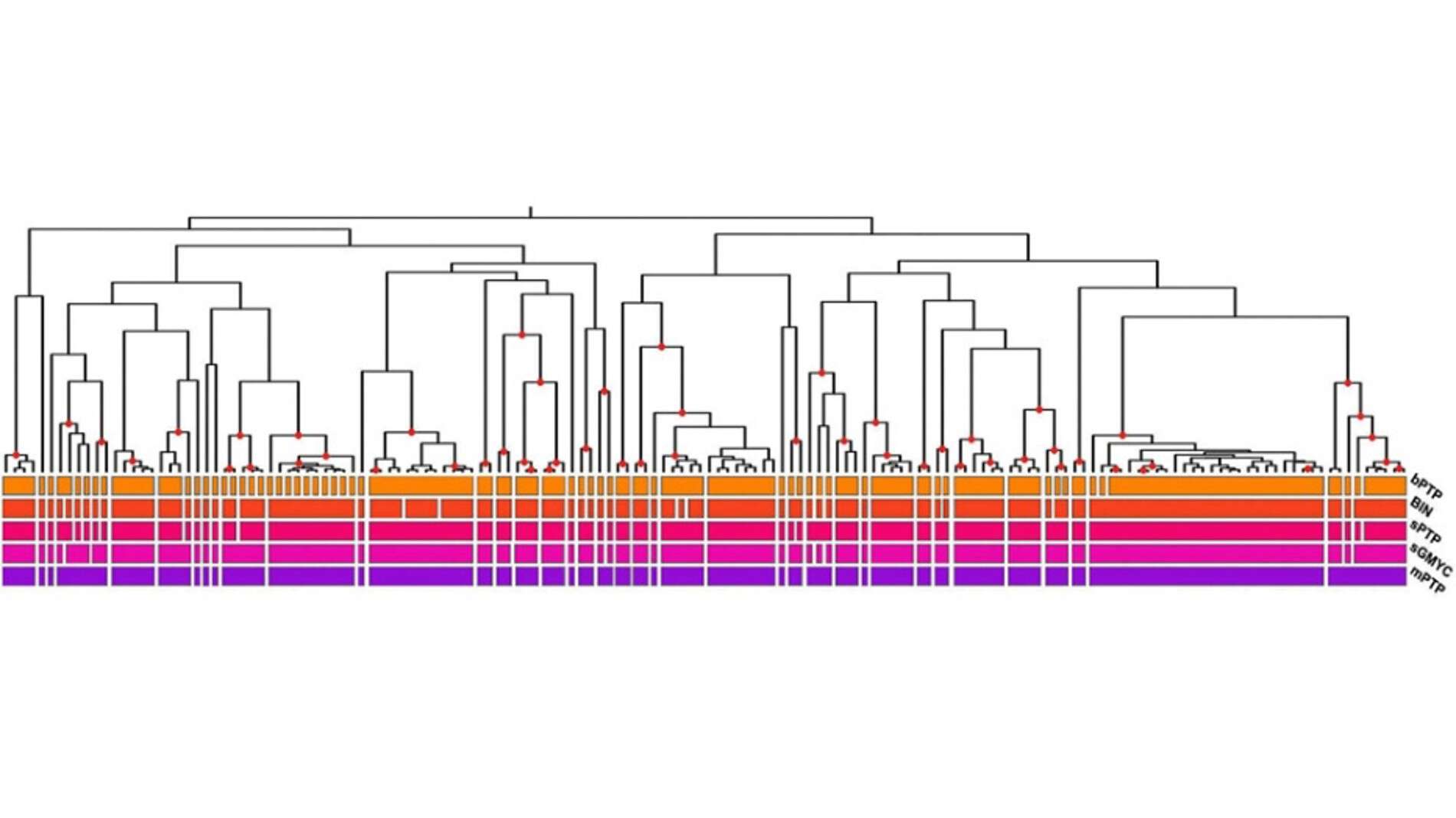
- Species identification and delimitation with DNA. Which methods can be used to differentiate species by molecular data? Do different methods and different markers provide conflicting results?
- Characteristics of reference databases. Emphasis on BOLD and UNITE as barcode reference depositories. How to retrieve and analyse data and how to use the available tools in these databases. Creating and retrieving datasets for analysis with other software (e.g. MEGA, PTP, ABGD, GMYC).
- What are the major uses of DNA barcode data in biodiversity science and management? Phylogenetics, phylogeography, taxonomy, biomonitoring.
- Opportunities and challenges with DNA barcoding of plants.
- Quality assurance and quality control of barcode reference libraries. Which possibilities exist, and how can you deal with errors?
- How to use DNA barcodes in integrative taxonomy? What is it, what are the benefits? Is it acceptable to describe new species on DNA sequence data alone?
- Challenges for international genetic projects in the light of international agreements on access and benefit sharing of genetic resources (e.g., the Nagoya Protocol).
- The future of DNA barcoding in biodiversity research, including possibilities with advanced sequencing technologies.
Learning outcomes
After completing the course, participants will:
- have the theoretical and practical background needed to understand, perform and critically evaluate the use of DNA barcodes and DNA barcoding in biodiversity research
- understand both the possibilities and limitations of the method
- have hands-on experience in handling biodiversity data available through open-access databases
Target group
PhD students, Master’s students, postdocs, researchers, consultants and government officials with a relevant background in biology.
Language
English
Credits
The course is equivalent to 3 ECTS.
Assessment
Preparatory reading prior to the course is required, and an oral exam will be held online approximately two weeks after the course ends. BIOCORE will provide certificates which describe workload equivalent to ECTS for those who successfully pass the exam, or confirmation of participation to those who choose not to take the exam.
Teachers
- Torbjørn Ekrem - Professor, NTNU University Museum, Trondheim, Norway
- Rakel Blaalid - Associate Professor, Nord University, Steinkjer, Norway
- Filipe Costa - Associate Professor, University of Minho, Braga, Portugal
- Emily Hartop - Associate Professor, NTNU University Museum, Trondheim, Norway
- Pete Hollingsworth - Professor, Royal Botanic Garden Edinburgh, UK
- Elisabeth Stur - Researcher, NTNU University Museum, Trondheim, Norway
Admission and application
Number of participants
Maximum 20 participants.
Eligibility and prerequisites
Basic knowledge in biodiversity science and at least a bachelor’s degree in biology is required. Some experience with molecular data and the use of molecular systematics software is an advantage. Participants are expected to read a selection of scientific review papers in advance and familiarise themselves with the BOLD and UNITE databases.
We encourage all course applicants to become Associate Members of BIOCORE to receive updates and information about future events. Not a member yet? Become a BIOCORE member here.
How to apply
Applications open on October 30.
Application deadline
31 January 2027
Selection process
If there are more applicants within each quota than places, participants will be selected based on their scientific, educational, and/or professional merit, motivation, and the relevance of the course for their career development.
Results of the selection process will be announced by email shortly after the application deadline.
BIOCORE Membership
We encourage all course applicants to become Associate Members of BIOCORE to receive updates and information about future events.
Not a member yet? Become a BIOCORE member here.
Financial support
There is no course fee. The participants must cover and organise their own trip to and stay in Trondheim.
Contact
Elisabeth Stur (BIOCORE & BGE+)